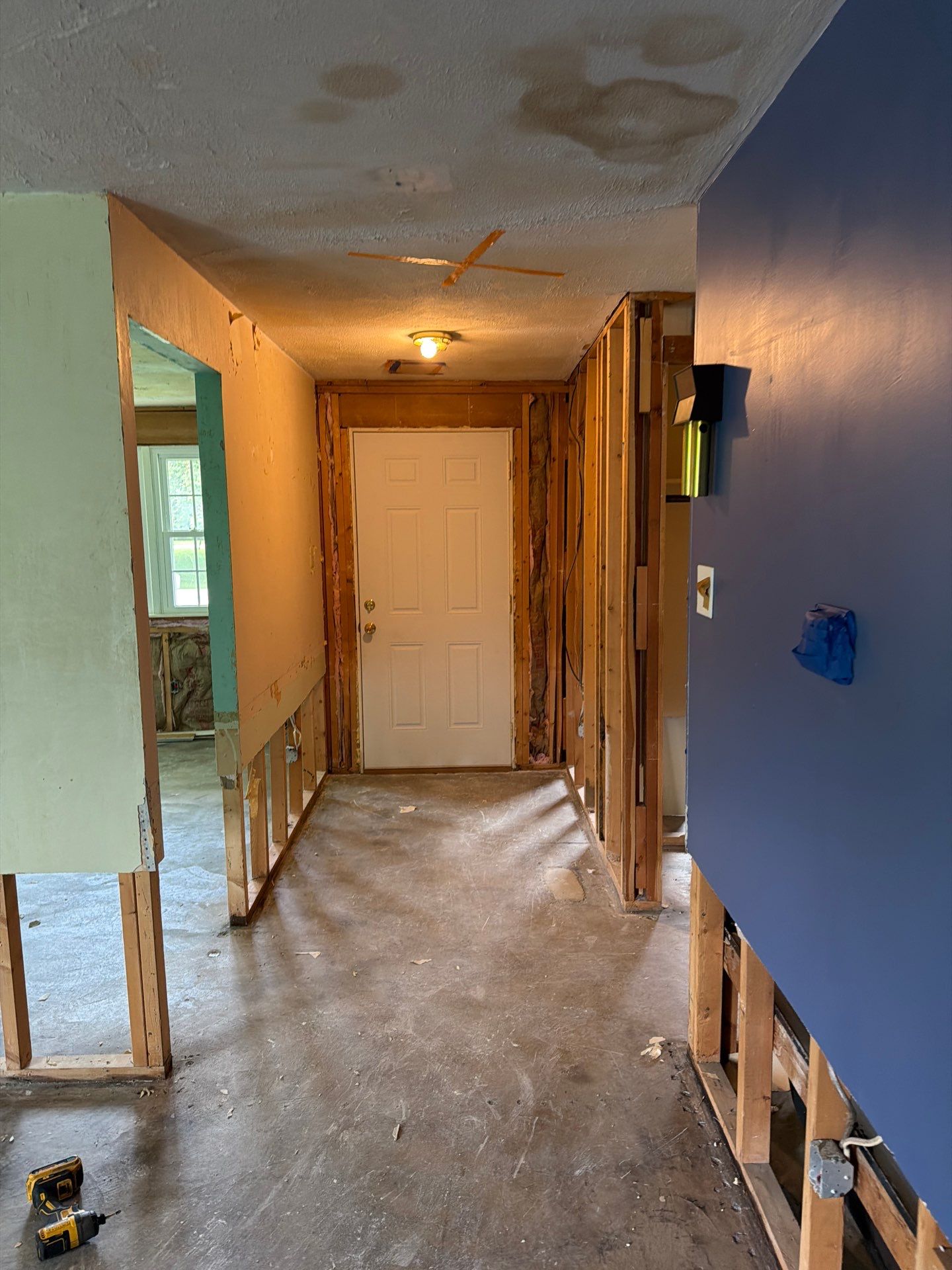
The 6 Most Common Bathroom Leaks We See in Holliday Park
Ranked by call volume from our last three years of Holliday Park dispatch logs:
- Wax ring failure under the toilet. Slow seepage stains the ceiling below or rots the subfloor around the flange.
- Shower pan or grout leak. Water escapes through cracked grout lines or a failed pan liner and saturates the wall cavity.
- Supply line burst. The braided line behind the toilet or under the vanity ruptures, dumping 4 to 8 gallons per minute.
- Tub or shower drain leak. The drain assembly loosens and water drips into the joist bay every time the shower runs.
- Caulking failure around the tub. Old caulk lets water track behind the wall on every shower cycle.
- Toilet tank crack or fill valve failure. Often discovered as a constantly running toilet that also leaks at the base.
Warning Signs You Cannot Ignore
If you notice any of these, treat it as active damage:
- Soft, spongy, or discolored flooring around the toilet base
- Loose tiles in the shower or a tile that sounds hollow when tapped
- Peeling paint or bubbling drywall near the tub or shower wall
- A musty odor that returns within hours of cleaning
- A water stain on the ceiling directly below an upstairs bathroom
- A toilet that rocks when you sit down (the flange seal is broken)
- Caulk or grout that is cracked, missing, or darkened
- Higher than normal water bills with no obvious explanation
- Rust stains around the base of the toilet bolts or the tank fasteners
- Condensation that never seems to dry on the underside of the tank
- Baseboards that have started to swell, separate, or pull away from the wall
Mistakes That Make Bathroom Leaks Worse
- Caulking over a soft floor instead of fixing the flange
- Painting over a ceiling stain before the leak source is repaired
- Running a box fan on wet drywall for a week and assuming it is dry
- Replacing tile without checking the pan liner or backerboard
- Using bleach on porous surfaces and assuming the mold is gone
- Reinstalling the same toilet on a wet or rotted flange ring
- Closing the bathroom door to "contain" the problem (it traps humidity and feeds mold)
- Waiting more than 72 hours to call, then losing Category 1 status
When to Call Plumbing First, Restoration Second
If water is actively flowing, a plumber stops the source. Holliday Park Water Restoration handles everything after that: extraction, drying, demo, and rebuild. We coordinate with your plumber and your adjuster so you are not the middleman. If you are still tracing the source and water keeps appearing in unexpected places, our team can pull up hidden leak detection tools to confirm whether the issue is the shower, the toilet, or a supply line behind the wall.
One more note for Holliday Park homeowners: if the leak is in a second-floor bathroom, do not punch holes in the ceiling below to "let it drain." Call us first. We can controlled-relief the ceiling in a way that preserves the drywall around it and gives the adjuster a cleaner claim to approve.
How to Prevent the Next Leak
Most of the bathroom losses we respond to in Holliday Park were preventable. A few habits that actually move the needle:
- Replace braided supply lines every 5 to 7 years, even if they look fine
- Re-caulk the tub and shower perimeter every 18 to 24 months
- Check the wax ring any time the toilet rocks, even slightly
- Run the exhaust fan during every shower and for 20 minutes after
- Install a leak detector puck behind the toilet and under the vanity
- Inspect grout lines twice a year and seal them annually
- Replace fill valves and flappers at the first sign of a running toilet
- Know where your main shutoff is, and make sure every adult in the house knows too
IICRC Water Categories for Bathroom Leaks
Category determines cost, scope, and what materials we can save:
- Category 1 (clean water): A supply line break or shower valve leak. Caught quickly, most materials can be dried in place.
- Category 2 (grey water): Shower drain water with soap, hair, and skin cells. Some materials must be removed.
- Category 3 (black water): Toilet overflow from the bowl side of the trap, or any sewage backup. Porous materials are non-salvageable. See our toilet overflow cleanup breakdown for the full Category 3 protocol.
Time matters. Clean water becomes Category 2 in 48 hours. Category 2 becomes Category 3 once microbial growth starts.
Stop the Damage: First 10 Minutes
Before you call anyone, do this:
- Shut the supply valve. Toilets have a valve behind the bowl. Showers usually require the main house shutoff.
- Turn off the main if you cannot isolate the fixture.
- Soak up standing water with towels. Do not use a household vacuum on water.
- Pull back rugs, bath mats, and anything porous that touched the water.
- Open the bathroom door and run the exhaust fan to drop humidity.
- Photograph everything before you move it. Your adjuster will want timestamps.
- Move toiletries, electronics, and cabinet contents to a dry room.
- Check the room directly below the bathroom for ceiling bulges or active dripping.
- Call a restoration team if water reached the subfloor, the wall cavity, or a lower floor.
For a deeper triage walkthrough, our emergency water removal guide covers extraction timing and what professional equipment actually does.
What Holliday Park Water Restoration Does on Site
- Moisture mapping with thermal imaging and pin meters to find hidden saturation
- Containment so dust and microbial spores do not spread through your HVAC
- Targeted demo: removing only the materials that cannot be dried
- Commercial air movers and LGR dehumidifiers, monitored daily until dry standard is hit
- Antimicrobial treatment on all affected framing and subfloor
- Cavity drying with injection systems when water is trapped behind tile or under cabinets
- HEPA air scrubbing during demo on any Category 2 or 3 loss
- Direct documentation to your insurance carrier with photos, moisture readings, and dry logs
What Bathroom Water Damage Costs in Holliday Park
Realistic ranges based on what Holliday Park homeowners actually pay:
- Wax ring replacement and minor subfloor repair: $400 to $900
- Subfloor replacement around toilet flange: $800 to $2,200
- Shower wall tear-out and drying: $1,500 to $4,500
- Ceiling repair from upstairs bathroom leak: $700 to $2,800
- Vanity and cabinet replacement after a supply line burst: $600 to $2,500
- Full bathroom restoration after Category 3 event: $4,000 to $12,000
- Mold remediation if the leak was hidden for weeks: add $1,500 to $6,000
Insurance typically covers sudden and accidental leaks. Slow, long-term seepage is usually excluded, which is why documenting the discovery date matters.